Astrosociology
Research Institute (ARI)
The
original Nonprofit Public Benefit Corporation dedicated
to the development of astrosociology
TM
|
|
|
|
About
ARI
The
Astrosociology Research Institute (ARI) is a California
nonprofit public benefit educational corporation dedicated
to the development of astrosociology as a multidisciplinary
academic field. Its mission includes providing
assistance to individuals and organizations that choose
to pursue ARI's mission as stated on the home page of
this site. It's mission emphasizes assistance to students
conducting astrosociological study and original research. ARI
is the original 501(c)(3) organization dedicated to the
development of astrosociology as an accepted field in
academia and to cutting-edge astrosociological research.
The
Astrosociology Research Institute is not a space
advocacy group. Rather, ARI dedicates itself
to conducting science and to helping others do the same
so that we may all construct a coherent astrosociological
body of knowledge and related literature, and place the
field of astrosociology into academia as a permanent fixture.
The staff and formal associations appear below.
| ARI
Officers |
 |
Jim Pass, Ph.D., Chief
Executive Officer
Email: jpass at astrosociology.org / Twitter:
@astrosociology
Dr.
Pass received a doctorate in sociology from the University
of Southern California in 1991. He also received a masters degree in sociology
from USC in 1984 . Additionally he holds a B.S. in criminal justice and
sociology, as well as a M.S. in criminal justice, both from California State
University, Long Beach. Long seeking
to combine his passion for space exploration with
his professional training in sociology, he finally
moved ahead with his long-term ambition in 2003 when
inspired by an article he found on the internet written by Dr. Allen
Tough, called Positive Consequences of
SETI Before Detection, that mentioned
the term "astrosociology" as a possible new field (see the Virtual
Library page). As the founder of astrosociology, Dr. Pass refined the definition
and scope of the new field over the next seven months
until he was finally ready to publish the first website dedicated exclusively
to astrosociology, Astrosociology.com,
in July 2003. From that time forward, Dr. Pass and others have continued to
refine the definition, which includes how astrosociology is relevant to daily
social life and thus to societies, to the social science fields and disciplines,
and to the natural and physical science fields and disciplines. Dr. Pass was adamant about expanding the field of astrosociology from a sociology subfield to a multidisciplinary field, which has helped the field develop more quickly in recent years.
Dr. Pass taught the first astrosociology course. He
continues make oral presentations as well as
write conference papers, articles, and book chapters regarding various
subfields and issues related to astrosociology in order to demonstate the scope,
relevance, and need to develop this important field. These subfields include astrosociology in the classroom, the definiton of
astrosociology, the need to develop astrosociology alongside STEM subjects, planetary
defense, spacefaring societies, astrobiology and SETI, applied astrosociology, space colonies and
settlements (including the concept of space societies), medical astrosociology,
deviance in space habitats, and the need for formalized collaboration between
the two major branches of sciences: the social sciences on the one hand, and the
physical and natural sciences on the other hand.
Since August 2004, when Dr. Pass met with Dr. Marilyn
Dudley-Flores and Thomas Gangale at the American
Sociology Association (ASA) meeting in San Francisco,
the development of astrosociology carried forward. They
brought the field to the American Institute of Aerosnautic
and Astronautics (AIAA) and Dr. Pass was instrumental
in establishing the Symposium on Astrosociology
as part of the Space Propulsion and Energy Sciences
International Forum (SPESIF) in 2007, which lasted for three years. In
May 2008, these three founding officers formed the
Astrosociology Research Institute, sparked by a major push by Dr. Pass. Although Dr. Dudley-Flores and Mr.
Gangale left ARI to pursure other matters, their contributions were invaluable
to the development of astrosociology during its formative years. Dr.
Simone Caroti and Mr. Christopher Hearsey joined ARI
in 2010 as officers to take their positions, and the field continues to make strong
process under ARI's new leadership. Most recently, serveral new officers have joined ARI, including officers Kathleen Toerpe and Renato Rivera Rusca.
In 2011, Dr. Pass assisted Christopher Hearsey with
the editing of a special edition of the journal Astropolitics that was dedicated
exclusively to astrosociology. He co-wrote the introduction with Mr. Hearsey and
contributed the first article examining the definition of astrosociology. Currently,
Dr. Pass continues to work on various projects and programs along with officers,
advisors, supporters, and volunteers to further the development of the field.
Expect major developments in 2013 and 2014.
|
 |
Michael Waltemathe, Ph.D.,
Deputy Chief Executive Officer for International Outreach and Education - Europe
Email: mwaltemathe at astrosociology.org / Twitter: @MWaltemathe
Michael Waltemathe is senior lecturer in religious education at the department of Protestant Theology at Ruhr-University Bochum in Germany. Michael's academic interests include the relationship between human space exploration and religion, connections between media, art and religion (esp. video-games and religion) and the science-religion debate and its place in religious education. His latest publications include the monograph “Playing Religion. Appropriate use of computer-games in religious education”, Hamburg 2011 (German), and the articles “Bridging Multiple Realities: Religion, Play and Alfred Schutz’s Theory of the Life-World”, in: Campbell, Grieve (eds.): Playing with Religion in Digital Games, IN, 2014 (in press) and “A Religious Vision for Interstellar Travel?” in ta katoptrizomena 89 - Exotheologie http://www.theomag.de/89/. Dr. Waltemathe also co-authored “Destination 2064”, a computer-game for the John Calvin-anniversary in 2009. He is currently working on a project concerning analytical approaches to the science-religion debate in religious education.
|
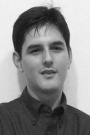 |
Renato Rivera Rusca, M.A.,
Deputy Chief Executive Officer for International Outreach and Education - Asia / Assistant Secretary
Email: rrivera at astrosociology.org
Renato Rivera Rusca is a graduate of Japanese Studies at Stirling University in
Scotland and has conducted research on Japanese popular culture in Osaka
University and Kyoto University. He has lectured at the Manga Faculty at Kyoto
Seika University and has participated in many projects involving the Kyoto
International Manga Museum since its inception. He is currently a lecturer at
the School of Commerce, Meiji University.
In recent years he has administrated an introductory course on social and
economic factors related to space exploration and development as part of the
Special Themed Practicum classes in Meiji University, and is a member of the
"Uchuu seizongaku kenyuukai", a research group for the study of issues
pertaining to the changing role of culture in the space age and its imagined
future for the survival of mankind.
|
!
 |
Michael S. Dodge, J.D., LL.M.,
Deputy Chief Executive Officer for Academic Affairs
Email: mdodge at astrosociology.org
Michael S. Dodge currently serves as an Assistant Professor & Graduate Program Director in the Department of Space Studies at the University of North Dakota. Prof. Dodge obtained his J.D. from the University of Mississippi School of Law (2008), and his LL.M. in Air & Space Law at McGill Faculty of Law in Montreal, Canada, where he wrote a thesis on “Global Navigation Satellite Systems (GNSS) and the GPS-Galileo Agreement”. Prof. Dodge is formerly Research Counsel & Instructor in the LL.M. in Air & Space Law Program at the University of Mississippi School of Law, where he taught courses in aviation law, remote sensing law and regulation, as well as domestic and international space law. At the University of North Dakota, he teaches courses that include space law, history of the space age, space politics & policy, and remote sensing law & regulation. He is also Editor-in-Chief of the Journal of Astrosociology, and the Deputy Chief Executive Office for Academic Affairs for the Astrosociology Research Institute. His research interests include the environmental management of outer space, global navigation satellite systems, the concept of sovereignty and ownership rights in space, and the law and regulation of remote sensing technologies..
|
!
 |
Matjaz Vidmar, MSc,
Deputy Chief Executive Officer for Programs and Special Projects - Europe
Email: mvidmar at astrosociology.org
Matjaz Vidmar obtained a BSc in Physics and MScs in Science and Technology in Society and by Research in Science and Technology Studies, all from the University of Edinburgh. In his undergraduate studies he specialised in Astronomy Instrumentation and in his Masters research he was working in science (policy) evaluation, innovation and economic growth.
He is a doctoral student in Science, Technology and Innovation Studies at the University of Edinburgh, based at the Royal Observatory Edinburgh, Scotland, UK. In his doctoral research, he is deploying ethnographic methodology to study high-tech innovation in the Space Industry, focusing on emerging networks, knowledge transfer and changes to new product development processes, in particular looking at recent (»New Space«) developments in previously peripheral countries.
His research is linked with applications in science policy and business incubation, for instance by working in close partnership with several research organisations, intermediaries and government bodies. Additionally, he is involved in many international initiatives and projects to develop the future of Space Exploration and Industry, such as serving as the Policy Lead for the Gateway Earth Development Group.
As part of his work at the ARI, he is assisting on the production and development of the Journal of Astrosociology, the Astrosociolgical Insights newsletter and expanding the current programmes and projects in research consolidation, education and outreach. He is also leading on developing new networks and initiatives with related fields and researchers across Europe.
He is also a university lecturer, a student mentor and tutor, and an award winning science communicator, with projects delivered in several countries and in leading science and arts venues. You can find more about Matjaz, his work, and how to get in touch at: www.roe.ac.uk/~vidmar.
|
!
 |
Simone Caroti, Ph.D.,
Assistant
Secretary
Simone Caroti is Director of Public and Educational
Outreach and a member of the board of the Astrosociology
Research Institute. In this role, he aims at expanding
ARI's membership base and at establishing a set
of templates for introducing astrosociological education
in schools and colleges across the country. Mr.
Caroti is also co-chair of the Astrosociology Symposium
at Space Propulsion & Energy Sciences International
Forum. Dr.
Caroti received his BA in Anglo-American literature
at the University of Trieste, Italy, in February
of 2002, and in the summer of the same year moved
to Purdue University, Indiana, to conduct his graduate
studies in the Comparative Literature program. He
received his MA in 2004, and his Ph.D. in 2009 with
a dissertation on the history of the generation
starship concept in science fiction. This dissertation
is now in the process of becoming a book to be published
in the near future.
Dr.
Caroti has dedicated his graduate years to the study
of science fiction (SF), both as a literary mode
in its own right and as a reflection on the variables
inherent in the human adventure in space. Specifically,
his work for ARI focuses on building conceptual
and procedural bridges linking science fiction to
the larger field of astrosociology, so as to make
it possible to conduct astrosociological studies
both of individual SF stories and of entire sub-genres
within science fiction. He has published articles
for the American Institute of Physics and a book
chapter for Purdue University. He is currently an
adjunct professor in the English Department at Purdue,
teaching introductory composition and professional
writing.
|
Board of Directors |
|
Christopher M. Hearsey, J.D., LL.M., Chairman (Updated biography forthcoming).
|
|
Simone Caroti, Ph.D. (See biography above).
|
|
Michael S. Dodge, J.D., LL.M. (See biography above).
|
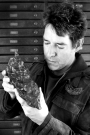 |
Geoffrey Notkin, B.F.A.
Geoff Notkin hosts the STEM Journals for Cox Communications and the multi-award-winning television adventure series
Meteorite Men for the Science Channel. He has also appeared in shows for Discovery, NASA EDGE, TLC, PBS, A&E, National Geographic Channel, History Channel, Travel Channel, and the BBC. Geoff is a science writer, meteorite specialist, photographer, world traveler, and the owner of Aerolite Meteorites LLC, a company that provides meteorite specimens to collectors and institutions worldwide. He has appeared on
Coast to Coast and the Today show and has been interviewed by
The Washington Post, The Huffington Post, Space.com, and many other leading publications.
An award-winning author, Geoff has published more than 150 articles on meteoritics, paleontology, astronomy, adventure travel, history, and the arts, with his work appearing in
Astronomy, Astronomy Now, Sky & Telescope, All About Space,
USA Today, Wired, Reader’s Digest, The Village Voice,
Seed, Rock & Gem, Geotimes, Meteorite, and many other national and international publications. He is the author of the books
Meteorite Hunting: How To Find Treasure From Space and Rock Star: Adventures Of A Meteorite Man, and a popular science and arts blog,
The Logical Lizard, for Tucson, for TucsonCitizen.com.
Geoff has worked with many of the world’s major institutions including The American Museum of Natural History, New York; The Natural History Museum, London; and The Center for Meteorite Studies at ASU, Tempe. He is a member of The Explorer’s Club, the Electronic Frontier Foundation, the International Meteorite Collectors’ Association, and the Association of Applied Paleontological Sciences. The minor planet 132904, discovered at Mount Palomar, was named after Geoff in recognition of his contributions to science and education.
Expeditions Expeditions have taken Geoff to forty-five countries and some of our planet’s most remote areas including northern Siberia, Chile’s Atacama Desert, the Australian Outback, and he has three times crossed the Arctic Circle.
Geoff was born on 14th street in Manhattan and grew up in London, England. He studied geology, astronomy, photography, writing, and design in London, Boston and New York. He now resides in the Sonoran Desert of Arizona.
|
| Jim Pass, Ph.D. (See biography above).
|
| Renato Rivera Rusca, M.A. (See biography above).
|
Board of Advisors
|
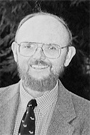 |
In Memoriam (1940-2015)
Albert A. Harrison, Ph.D.
(See the biography and legacy page, and Dr. Harrison's references, which comprise a very good foundation for anyone interested in pursuing astrosociology).
|
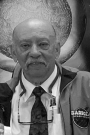 |
Bob Barboza, M.S.
Education and Careers
Bob Barboza Bob Barboza is currently the CEO of the Barboza Space Center with headquarters in Long Beach, California. He has a Bachelor of Science Degree in Sociology from California State University, Los Angeles, and a Master of Science Degree in Special Education. He earned both special and general education teaching credentials from Mount Saint Mary’s College. His school administrative credential is from California State University, Long Beach. He is a self-taught design engineer and is a board member of the Robotic Society of Southern California.
Industry Awards
Bob Barboza received the C.U.E. Technology in Leadership, Leadership Award, and the Gohardani Presentation Award Sponsored by The Springs of Dreams Corporation and American Institute of Aeronautics and Astronautics for High Standards of Excellence.
Grants, Fellowships, Presentations, and Special Space Science Project-Based Learning Projects
• Southern California Robot Showcases, 2020-Present
• Ontario International Airport Space and Aviation Community Conference
• Barboza Space Center Junior Astronaut, Engineers, and Scientists Tiger Team Training Workshops
• Long Beach Unified School District Barboza Space Center Junior Astronaut Tiger Team Space Science Fellowship Programs
• Barboza Space Center Space and Aviation Program for the Chaffey and Fontana Unified School Districts
• Super School University and Barboza Space Center International Space Science Collaboration Projects Republic of Cabo Verde
• Presentations: Computer Using Educators, California Association of Bilingual Educators, California Association of Resource Specialist, Apple Computer, Boeing High School Internship Program, American Institute of Aerospace and Astronautics, Los Angeles-Las Vegas Section, USC Mission Science and Engineering Presentation for students from USA, Australia and South Korea
• Additional presentations: California Association for the Gifted, California Math Council, California Association of Science Educators
Future Projects
• The Barboza Space Center’s First School on Mars Project
• Astrosociology Leadership Training for High School Astronaut Tiger Teams
|
 |
Lynn
E. Baroff, M.S.
Lynn
Baroff is Executive Director of the California Space
Education and Workforce Institute (CSEWI), a non-profit
agency established by the State of California. The
institute’s purpose is to integrate the efforts
of that state’s educational establishment
and its huge space enterprise, in maintaining and
growing the workforce needed for the world’s
largest space economy.
He
comes to the Institute after 16 years at NASA’s
Jet Propulsion Laboratory (JPL), where he most recently
worked as Human-Systems Integration lead with NASA’s
Constellation Program, America’s next generation
program for human space flight. He continues his
association with NASA as a Senior Research Scientist
at NASA Ames Research Center, leading an agency-wide
team in developing a standard for automated and
robotic systems that support long duration human
space missions. His views on the importance of Astrosociology
to the space program stem from his work in developing
the social and work process patterns that will support
new and long duration space missions to the moon,
Mars, and beyond. Mr.
Baroff began his NASA career as chief of management
training at JPL, where he was an internal consultant
to senior management on critical organizational
issues. He worked on project formulation and systems
engineering teams for JPL’s Dawn mission,
the Mars Reconnaissance Orbiter, New Millennium
Deep Space 2, and Stardust mission. He also served
as JPL’s special liaison to the United States
Air Force space program, located at the Space and
Missile Systems Center in El Segundo.
Before
NASA, Mr. Baroff was a management consultant specializing
in work systems analysis, strategic planning, and
human resources management. He worked with such
clients as Toshiba America, Xerox, Rockwell, and
the Country of Los Angeles, creating employee and
management educational programs. He has also been
a commercial television producer, director and station
executive, creating over 3,000 television programs
and over 750 commercials.
He
holds a Master of Science in Engineering Management,
Bachelor of Arts in Communication, and has completed
graduate work in Instructional Design and Behavioral
Science. Additionally he holds a Certification in
Systems Engineering from the California Institute
of Technology, and several certifications from NASA.
He has been an adjunct faculty member in the USC
School of Public Administration, and is currently
adjunct faculty at UCLA, teaching Systems Engineering
in the Graduate Extension program.
Mr.
Baroff is a founding member of spacearchitect.org,
a member of the American Institute for Aeronautics
and Astronautics (AIAA), a member of the Human Factors
and Ergonomics Society (HFES), and a Board member
of the International Council on Systems Engineering
(INCOSE). His publications include many peer-reviewed
papers and conference presentations on topics as
diverse as program-level Systems Engineering, Human
Factors issues in mission assurance, human-rating
for robotic and automated systems used in human
space flight, and role-focused competency-based
approaches to human resource development in the
American workforce.
|
 |
Sheryl Bishop, Ph.D.
Dr. Sheryl Bishop, Ph.D. is an Associate Professor,
and Social Psychologist at the University of Texas
Medical Branch, Galveston, Texas. She currently
serves as Senior Biostatistician for the School
of Nursing. From 2001-2007, she served as the curriculum
director for UTMB’s Space Life Sciences Ph.D.
curriculum. In addition, Dr. Bishop is a faculty
at the International Space University, Strasbourg,
France, and has contributed yearly to ISU’s
Space Science Program since 1994. She served as
the co-Chair and Chair for the International Space
University’s (ISU) Affiliate Campuses from
1999-2001 and 2006-2008. For the last 20 years,
Dr. Bishop has investigated human performance and
group dynamics in teams in extreme environments,
including deep cavers, mountain climbers, desert
survival groups, polar expeditioners and Antarctic
winter-over groups and various field simulations
of isolated, confined environments for space. She
routinely presents her research at numerous scientific
conferences, is published in both the medical and
psychological fields on topics as diverse as psychometric
assessment, research methodology, outcomes research,
psychosocial group dynamics and human performance
in extreme environments. She has participated in
various television documentaries on space and extreme
environments by Discovery Channel, BBC, 60 Minutes
and the History Channel. Dr. Bishop is a founding
member and Board of Trustee member of the Society
of Human Performance in Extreme Environments and
Senior Editor for the HPEE Journal. She joined the
Board of Advisors of the Astrosociology Research
Institute (ARI) in June of 2009. Dr. Bishop has
served as a grants reviewer for the Canadian Space
Agency, Contributing Editor for Life Sciences for
Habitation (formerly the Journal of Life Support
and Biospheric Sciences) and Review Editor for the
Journal of Aviation, Space and Environmental Medicine.
Through her extensive work in analog environments
into the social psychological and behavioral issues
pertinent to long duration space missions, she has
strongly supported the emergence of the field of
astrosociology as critical to the inclusion of the
most essential element of human factors, the interpersonal
human, at every level of consideration for successful
transition to a space culture. |
 |
Eduardo Diaz, Ph.D.
Dr. Eduardo Diaz is an Expert Human Factors Scientist. He delivers individual and team assessments to identify successful characteristic variables that influence team performance and outcomes. While earning his Master's of Science in Psychology in 2010 he completed his literature review; Identifying Motivational and Self-regulatory Variables that Improve Team Performance for Candidates Selected for Isolated Extreme Environment Missions, which he then applied in his doctoral work; Identifying Functional Characteristics that Influence Team Outcomes, which was completed and published in 2015.
Currently, he supports technology innovation as the Director of Talent Acquisition at Alexan Consulting Enterprise Services, LLC (ACES) in Sacramento, CA. He is an effective organizational leader and key member of management who applies peer reviewed human behavior research findings into actionable measures. He is also the author of the Organizational Team Index (OTI) which supports organizational growth and talent management.
In addition to his passion, which supports human factors research and its applications, he volunteers his time supporting STEM education in the classroom, in online technology communities, and as a guest speaker at technology events.
|
 |
Ken Duffy, Ph.D.
Dr. Duffy teaches theoretical and applied undergraduate sociology. He is an aspiring astrosociologist whose interest in astrosociology began in 2004 after reading Dr. Jim Pass’ Inaugural Essays. He was privileged to take the first Introduction to Astrosociology course offered by Dr. Pass. Ken has completed courses in the Master of Aeronautical Science, Space Studies degree program, offered by Embry Riddle Aeronautical University.
As a Licensed Professional Counselor Supervisor (LPCS) in private practice in NC, Ken provides counseling and therapy to individuals, couples, families, and groups. As a counselor educator, he provides clinical supervision to master’s level student interns and to graduates who seek state licensure. He coordinates the professional counseling program of a major international university and teaches graduate courses in clinical counseling theory and practice.
As a counselor/therapist, Dr. Duffy sees many similarities and connections to his work as a sociologist/astrosociologist. He applies sociological perspectives to his work as a counselor by incorporating the concepts of structure, function, competition, conflict, symbolic interaction/meaning, and the sociological imagination as it relates to the biographical, historical and interpersonal aspects associated with the issues his clients bring to the counseling sessions.
|
 |
Alice Gorman, Ph.D.
Alice Gorman is an internationally recognized leader in the field of space archaeology. She is a Senior Lecturer in the Department of Archaeology at Flinders University, where she teaches the Archaeology of Modern Society. Her research focuses on the archaeology and heritage of space exploration, including space junk, planetary landing sites, off-earth mining, rocket launch pads, and antennas. She is a member of the American Institute of Aeronautics and Astronautics, the Advisory Council of the Space Industry Association of Australia, and the Australian Institute of Aboriginal and Torres Strait Islander Studies. Her writing has been selected four times for The Best Australian Science Writing anthology, and in 2016 and 2017, she was shortlisted for the Bragg Prize in Science Writing. She tweets as @drspacejunk and blogs at Space Age Archaeology.
|
 |
Luke Idziak, M.S., B.A.
Luke Idziak received his B.A. in Historic Preservation (2006) from the University of Mary Washington in Fredericksburg, VA and subsequently performed conservation work and analysis upon a Saturn V rocket with a team at the U.S. Space and Rocket Center in Huntsville, Alabama.
Mr. Idziak is currently working towards his M.Sc. degree at the International Space University in Strasbourg, France. His primary area of interest lies at the intersection of historic preservation, public policy, and the artifactual elements of human space exploration. Prior to beginning graduate studies in order to focus on the preservation of orbital and lunar cultural resources, he served as a researcher at the Potomac Institute for Policy Studies in Arlington, Virginia where he was a member of the Center for Neuroscience Studies. His work there involved analysis and recommendations regarding human-machine and human-computer interfaces in the civil and military sectors as well as the current state of, and new technologies for, orbital debris mitigation. Mr. Idziak believes that there is value in securing material parts of the extant present in order that future generations should enjoy a continuity with, and an understanding of the early days of human space access and utilization; thus providing the raw material to see what has come before and to dream of what yet may still be.
|
 |
Nathan Johnson, J.D.
Nathan Johnson received his J.D. from George Washington University Law School, and his LL.M. in Space, Cyber, and Telecommunications Law from University of Nebraska College of Law. He interned with the FAA Office of Commercial Space Transportation during SpaceX’s first licensed flights to the International Space Station; and for the U.S. Congress House Committee on Science, Space, & Technology during markup of the NASA Authorization Act and consideration of updates to the Commercial Space Launch Act. He is a member of the International Institute of Space Law, Co-Vice Chair of the American Bar Association’s Space Law Committee, and writes a weekly e-newsletter for law students and young professionals, under the name Astro, Esq.
|
 |
Graham Lau, Ph.D.
Dr. Graham Lau has an educational background in chemistry (A.S.), biology (B.S.,), astrophysics (non-degree), and geology (Ph.D.). His research has focused on how life functions on diverse environments on Earth and how we might look for life elsewhere in the universe. This has included his work on sulfur geochemistry and mineralogy at a unique microbial habitat in the Canadian High Arctic. Dr. Lau also has interests in the philosophy of science fiction and in how to effectively share science with the public. While studying astrobiology, he became interested in the astrosociological factors that drive humans to explore, to ask questions about whether or not we are alone in the cosmos, and in the ways that different human cultures approach space exploration and frame their view of our place in the cosmos. Known also as The Cosmobiologist, Dr. Lau now co-hosts the NASA-funded show Ask an Astrobiologist and serves as the Director of Communications and Marketing for Blue Marble Space.
|
 |
Jeff Lee, M.Sc.
Jeff Lee is a theoretical physicist with the X-Physics Power and Propulsion Project at Icarus Interstellar. Jeff’s research specializations are: Quantum Black Holes, Relativistic Radiation & Thermodynamics, the Search for Extraterrestrial Intelligence (SETI), and Superbolides.
His astrosociological interests include: the Hazards from Near-Earth Objects, the Virtual Evolution of Interpersonal Relationships across Interplanetary and Interstellar Distances, and the Implications and Plausibility of First Contact Scenarios.
He is a reviewer for the Journal of the British Interplanetary Society, member of the International Advisory Board of the new space education journal Axiom, and researcher in the Frontier Physics Group at The Institute for Interstellar Studies.
Jeff is a tenured faculty member of Crescent School in Toronto, Ontario, where he lectures on Physics and Earth and Space Science. Additionally, he retains research interests in the field of Instructional Strategies for Students with High Functioning Autism.
He received his Bachelor of Science in Physics from York University in Toronto, Ontario, where he was awarded the Denise Hobbins Prize for Physics. As an undergraduate, Jeff worked in York University’s Laser Processing Laboratory, and studied Laser Materials Processing in Space (LaMPS) and the interaction of high-energy CO2 laser radiation with water. Bow Shocks of Atmosphere-penetrating Asteroids, a research paper Jeff wrote as an undergraduate, contended that the minimum diameter asteroid required for a Mass Extinction Event is only the now-accepted 1 km, and not the then-accepted 2-3 km.
For his Master of Science in Physics from the University of Windsor in Windsor, Ontario, he investigated Laser-Induced Fluorescence Spectroscopy. Concurrent with his studies in Physics, Jeff did graduate work in Applied Human Biomechanics.
Jeff is a certified H-2 hang glider pilot who also enjoys skydiving, snorkeling, weightlifting, martial arts, archery, target shooting, ham radio (VE3SPB) and electronics, computers, sociology, history, philosophy, and ichthyology.
|
 |
Elizabeth Lockard, Ph.D.
Dr. Lockard received her B.A. in Philosophy from the University of New Hampshire, her M.Arch in Architecture from Yale University, and her Ph.D. in Futures Studies from the University of Hawaii. She has written several articles on space habitat design from a humanistic perspective. Her doctoral dissertation, Human Migration to Space: Alternative Technological Approaches for Long-term Adaptation to Extraterrestrial Environments and the Implications for Evolution, was selected and published by Springer for outstanding research in the field of Space Studies.
She has taught architecture at the University of Hawaii School of Architecture and is currently an assistant professor in the Environmental + Interior Design program at Chaminade University in Honolulu.
|
 |
Kevin Maher
Kevin Maher received his B.A. in English from the University of Louisiana at
Lafayette. He has worked as a webmaster for academic and commercial sites. Mr.
Maher has used his web experience to assist ARI over the last year to redesign
the ARI website. He is an aspiring scholar in multidisciplinary space studies
and speaks Mandarin, French, and English. Mr. Maher currently lives in Shanghai.
|
 |
Michael P. Oman-Reagan
Michael Paul Oman-Reagan is an anthropologist, artist, and activist. His research looks at how we imagine futures in space and how space science and exploration can help us imagine and build better futures on Earth, in our solar system, and beyond. He works with astronomers, astrobiologists, interstellar travel organizations, and the SETI community, and has published his research in the International Journal of Astrobiology, the Journal for the Scientific Study of Religion, Critical Quarterly, and Futures. To build new collaborative networks and do public outreach, Michael organizes panels on the anthropology of space and writes for The Conversation, Scientific American, and Cultural Anthropology online. As a columnist for the Wenner-Gren Foundation’s SAPIENS, he introduced readers to how the anthropology of outer space can help us think about the ethical issues of science, exploration, settlement, astrobiology, and SETI in terms of social justice.
Michael grew up stargazing and imagining futures, in awe of the Milky Way’s visible galactic plane under the dark skies of rural Eastern Oregon. After working as an artist and curator he completed his B.A. in Anthropology, Religion, and the Thomas Hunter Honors Program at Hunter College, CUNY. He was chosen as a Critical Languages Scholar by the U.S. Department of State and earned his M.A. in anthropology from Hunter College based on his ethnographic work with transnational Indonesian activists and the Occupy movement. He received the “Movers and Shakers Advocate” award from Library Journal for co-founding the Occupy Wall Street library. As an award recipient from the prestigious Vanier CGS and the Social Sciences and Humanities Research Council of Canada, Michael has conducted ethnographic and collaborative fieldwork with interdisciplinary space science communities in the US and Canada. He is currently a doctoral candidate in anthropology at Memorial University, and an affiliate with the University of Victoria in British Columbia. He also serves as a member of the advisory board for METI International, and has advised presidential campaigns on space policy.
|
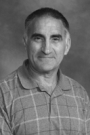 |
Vadim Rygalov, Ph.D.
Dr.
Rygalov received his B.S. and M.S. in 1974 and 1976, respectively, in biophysics
from Krasnoyarsk State University & Institute of Biophysics, Siberian Branch
Russian Academy of Sciences. He received his doctorate from the same
university in 1987, majoring in physical-mathematical sciences, ecological
biophysics & environmental design. His thesis was entitled
"Theoretical-Experimental Analysis of Sea Macro-Algae Growth."
Dr.
Rygalov
currently serves as Associate Professor in the Space Studies Department, John D.
Odegard School of Aerospace Sciences at the University of North Dakota.
His professional activities include life sciences/life support in space and
human factors in extreme environments, the variety of performances under extreme
environmental conditions (specifically free fall from stratosphere, closed
ecological systems for life support (specifically for space applications),
altered pressure greenhouses project (space greenhouses)-- investigating
altered-pressure physical fundamentals and environmental engineering, and
artificial climate design based on the interaction between inside-outside
greenhouse environments and altered-pressure plant physiology
(evapo-transpiration).
Dr. Rygalov is interested in investigation of principles of closure for ecological
systems functioning and its applications for life support in different areas.
His research is strongly based on mathematical approach to experimental data
description and interpretation.
|
 |
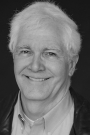
Gerhard Sonnert, Ph.D.
Dr. Gerhard Sonnert is a sociologist of science, working as a research associate in the Harvard College Observatory and as a lecturer in astronomy at Harvard University. He has taught an undergraduate course on astrosociology in the Harvard astronomy department since 2017, and he has also offered a condensed version of the course in the Harvard Summer School. He has a particular interest in the religious aspects of astrosociology and has published, with his teaching fellow Jais Brohinsky, a study titled "Religion and Extraterrestrials: An Astrosociological Perspective" (Glossolalia 8, no. 2 [2018]: 3-35). [It is also available in the ARI Virtual Library]. Other research interests include gender in science, science education, science policy, migration, and the history of science.
He holds M.A. and doctoral degrees in sociology from the University of Erlangen, Germany, and an M.P.A. from Harvard University.
|
 |
Frank White, M.Phil
Frank White is a magna cum laude graduate of Harvard College, a member of Phi Beta Kappa, and a Rhodes Scholar. He earned an M.Phil in Politics from Oxford, where he was a member of New College.
The fourth edition of Frank's best-known book, ration and Human Evolution, was published by Multiverse Publishing, a division of Multiverse Media LLC, this year.
A film called Overview, based largely on his work, has had more than 8 million plays on Vimeo.
Frank is president of The Human Space Program, Inc., a nonprofit organization based on an idea for a global space project initially proposed in The Overview Effect.
Frank teaches at Harvard Extension School, Harvard Summer School, Boston University's Metropolitan College, and Kepler Space Institute.
For additional information: frankwhiteauthor.com.
|
Board of Student Advisors
 |
Brooke M. Carruthers
Brooke Carruthers is a first-year undergraduate student at the University of Arizona. She plans to major in Molecular and Cellular Biology and double minor in Astrobiology and Marine Science. She currently participates in origins of life research at the Kacar Research Group at the University of Arizona, where she works with reconstructing ancient genes and studying how bacterial physiology changes when its modern gene is replaced with the predicted ancestral version. Brooke works specifically with nitrogenase and Azotobacter vinelandii, where she analyzes the growth rate of Azotobacter cells recombineered with ancestral nitrogenase genes. She plans to continue this current trend to pursue astrobiology research as a career. She is intrigued by the broad and interdisciplinary nature of astrobiology, and by the implications of potential astrobiological discoveries on human culture and society. Brooke is passionate about science outreach and communication and plans to integrate such work with her future research endeavors. Her interests in psychology and love of science fiction also contribute to her support of
astrosociology and ARI.
|
 |
Mia B. Frothingham
Mia Belle Frothingham is a Harvard University undergraduate, studying the fields of Molecular, Cellular, and Evolutionary Biology, Medicine, and Psychology, with a strong passion for Astrobiology and Astrosociology. She aspires to be an Astrobiologist, to search for extraterrestrial life and intelligence, and uncover unthinkable forms of life. Astrobiology has completely changed her perspective on where our place in the universe is as humans; She can never get enough of the wonders of the cosmos and the intricacies and mysteries of our never-ending universe.
Mia is passionate about expanding our awareness of our current search for otherworldly existence and sharing concepts, debates, theories, and perspectives of Astrosociology, Evolution, Astrobiology, and Psychology with the rest of the world entirety of the cosmos. She extensively ponders our endless search for E.T. life and how important it is to change our current ways.
Back in March, Mia published Our AstroLegacy (available on Amazon & Kindle). The purpose of her book is for self-awareness in discovering one's place in the universe. Humans evolved from our given green and blue paradise and developed into a unique and powerful species with beautiful culture, extensive knowledge, and striking diversity that is surprisingly not yet found anywhere else in our - potentially finite but probably infinite - universe. We are relatively puny in the magnitude of the cosmos and beyond, and we all should ask the difficult yet necessary questions of who are we? What is human? What is real? What do we actually know? Mia poses existential interrogations and give answers through Astrobiology, Medicine, Astrosociology, Psychology, and Evolution. She hopes to inspire her readers to make their own destiny, give them a further appreciation of their beautiful and unique existence, and uncover their impact on the universe's expansive size and timeline.
.
|
 |
Holly Worrall
Holly Worrall is an internationally educated, BA Hons Global Studies graduate from the University of Essex UK. She was recognised on the Dean’s List for Academic Excellence in 2019 and was subsequently awarded a First Class degree in 2020. Holly was awarded the Interdisciplinary Studies Centre Dissertation Prize 2020 for her dissertation titled ‘Astronomical Sublime: How Representational Conventions in Contemporary Astrophotography Shape Views of the Cosmos,’ which received the highest mark in the history of the department.
Growing up in 5 countries (England, Switzerland, Germany, China, and Singapore), Holly was exposed to a variety of cultures and volunteering opportunities that allowed her to acquire a global mindset. In Singapore, she was awarded the International Baccalaureate Diploma, taking English literature, psychology, and theatre at Higher Level, as well as mathematics, French, and design technology at Standard Level.
The experience of living abroad drove her to pursue a degree that involved the study of global challenges, with a focus on international relations from an interdisciplinary perspective. Whilst completing her degree, Holly found that the theoretical concepts she was learning failed to take into account the varied sociological dimensions when explaining their applications. In an attempt to address this, she expanded her learning to include modules in psychology, art history, and sociology.
Over the course of brainstorming ideas for her dissertation, Holly came across an image of Earthrise presented in its original vertical position. After many hours of research, she concluded that the impact of such visual depictions of the cosmos had not been adequately explored in relation to our understanding of the universe and subsequently ourselves. During this time, Holly came across the discipline of astrosociology and felt as though participating in the exploration of outer space had been opened up to her.
Previously, Holly felt that to be a part of the industry it was necessary to have a STEM background. However, astrosociology provided a much-needed bridge between the arts and physical/natural sciences. By including all dimensions of what represents humanity into the research and exploration of the universe, Holly believes that only then can a comprehensive understanding of the cosmos can be gained, which is why she supports astrosociology.
Holly is currently undertaking a six-month remote internship with AdvancingX, a company that identifies human factors known to influence team success and decision making and applies this unique OTI scoring system to astronaut and military training. Her position of responsibility is as Account Executive for the ISS National Lab and UK Analogue Mission as well as a Career Astronaut Liaison, allowing her to participate in a number of high profile projects. Holly wishes to pursue a future career in astrosociology and is planning on undertaking an MSc in science communication in order to more effectively explore visual depictions of the universe. Therefore, with all this in mind, Holly has joined ARI's Board of Student Advisors in order to become more involved and assist the discipline's progress by inspiring others, particularly young women, to engage with the space industry.
[Note from the CEO: After informing her that she did not require permission, Holly replied: "Well, if that is the case, then I am very excited to now refer to myself as an astrosociologist!" Awesome!]
|
ARI Research Team
|
|
Sheryl Bishop, Ph.D., Research
Associate |
|
Simone Caroti, Ph.D., Research
Associate |
|
Michael S. Dodge, J.D., LL.M., Senior Research Scientist |
|
Christopher M. Hearsey, J.D., LL.M., Senior Research Scientist |
|
Jim Pass, Ph.D. , Senior Research Scientist |
|
Renato Rivera Rusca, Senior Research Scientist |
|
Vadim Rygalov, Ph.D., Research Associate |
|
Michael Waltemathe, Ph.D., Senior Research Scientist |
|
|
©
2008-2024 Astrosociology Research Institute (ARI) / All Rights Reserved | |
|


